An Interview with Karen Cheok
INTERVIEWART
Interviewed by : Akshara Rao, Edited by : Arya Meshram
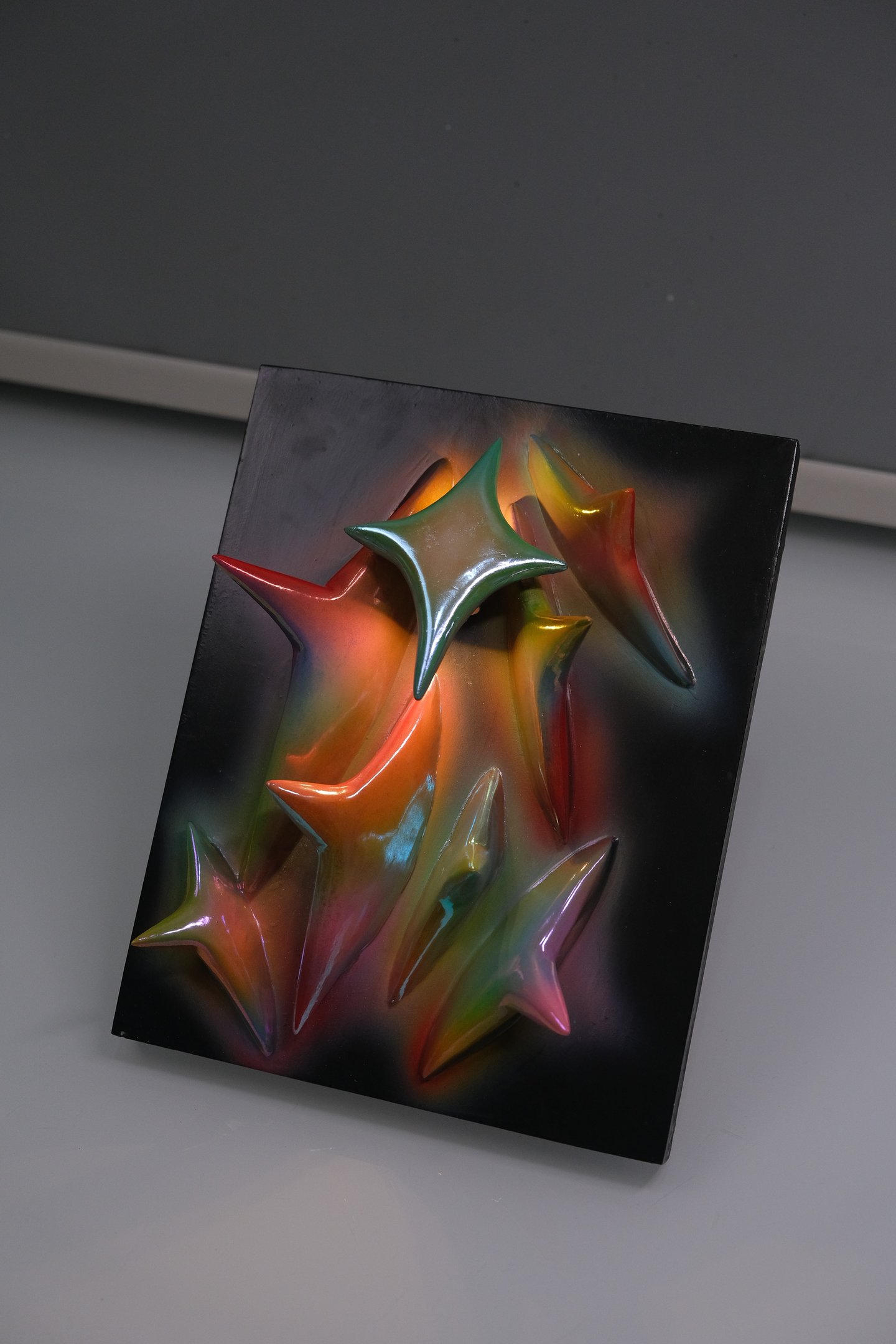
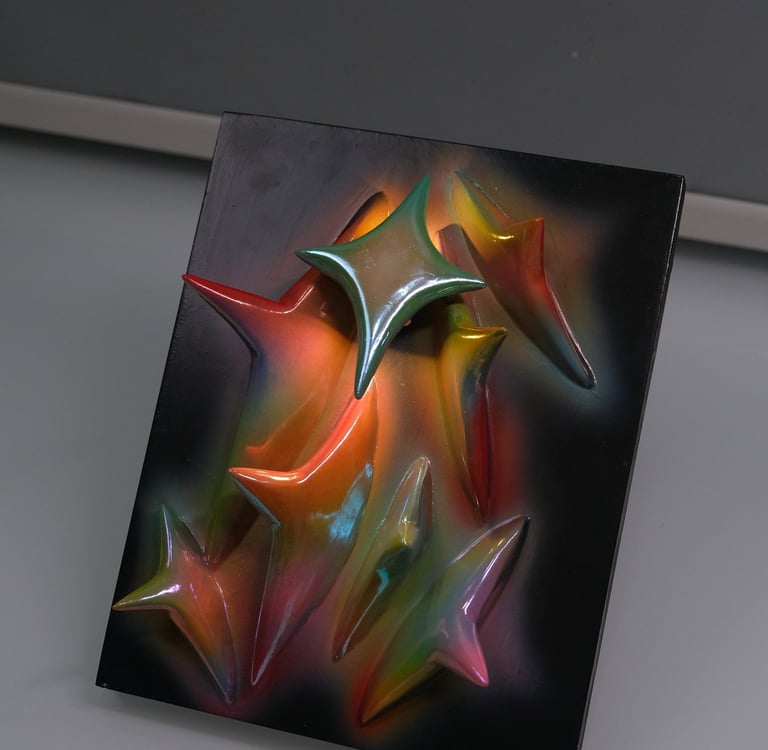
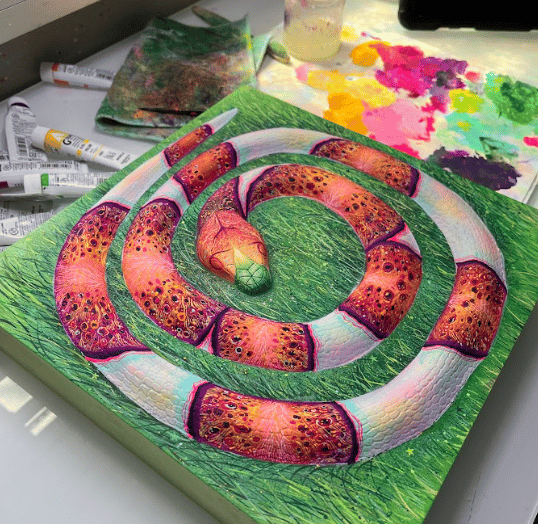
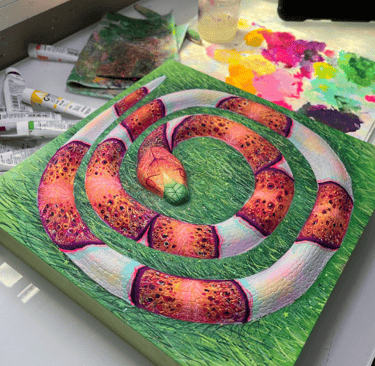
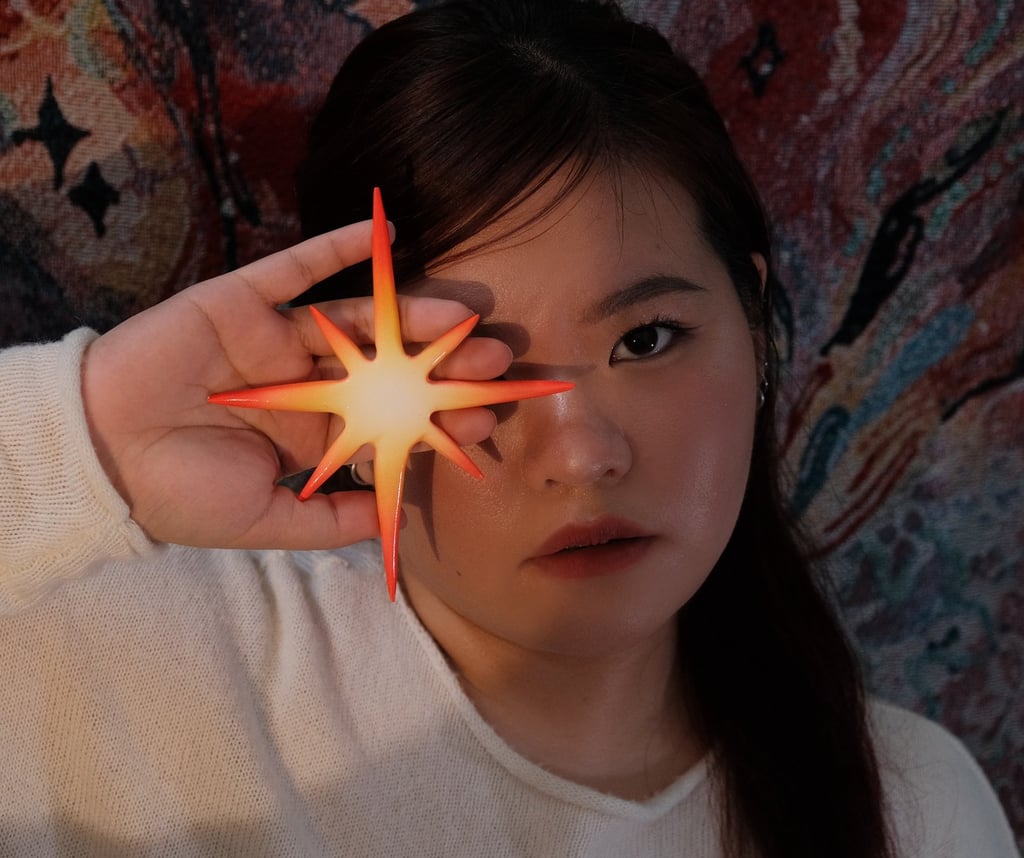
Karen Cheok is a Malaysian-Chinese multimedia artist who equips a unique vision for art. She incorporates whimsy and aesthetics into her artworks with vibrant colours and eye-catching themes. She utilises modelling clay to assign a unique personality to her canvases, thus making it her signature style.
In this interview, Karen shares her creative process, artistic philosophies, and lets us in on her art journey.
1. You, by combining techniques and artstyles, produce some of the most unique pieces in the modern art sphere. How would you describe your art to someone who can’t see it?
If I were to describe my work to someone who can’t see, I would invite them to imagine stepping into a vivid, almost dreamlike world.
In this world, everything feels alive and quietly magical…apples hanging from trees shimmer as if they hold light within them, flowers on the ground seem to glow softly, and the surface of the sea sparkles as it moves. There’s a sense of energy and wonder in every corner, as if the environment itself is breathing.
My artworks are like taking a moment from that world, pausing it, and turning that feeling into something you can hold and experience.
2. Do you have a favourite piece that you have created? What makes it special for you?
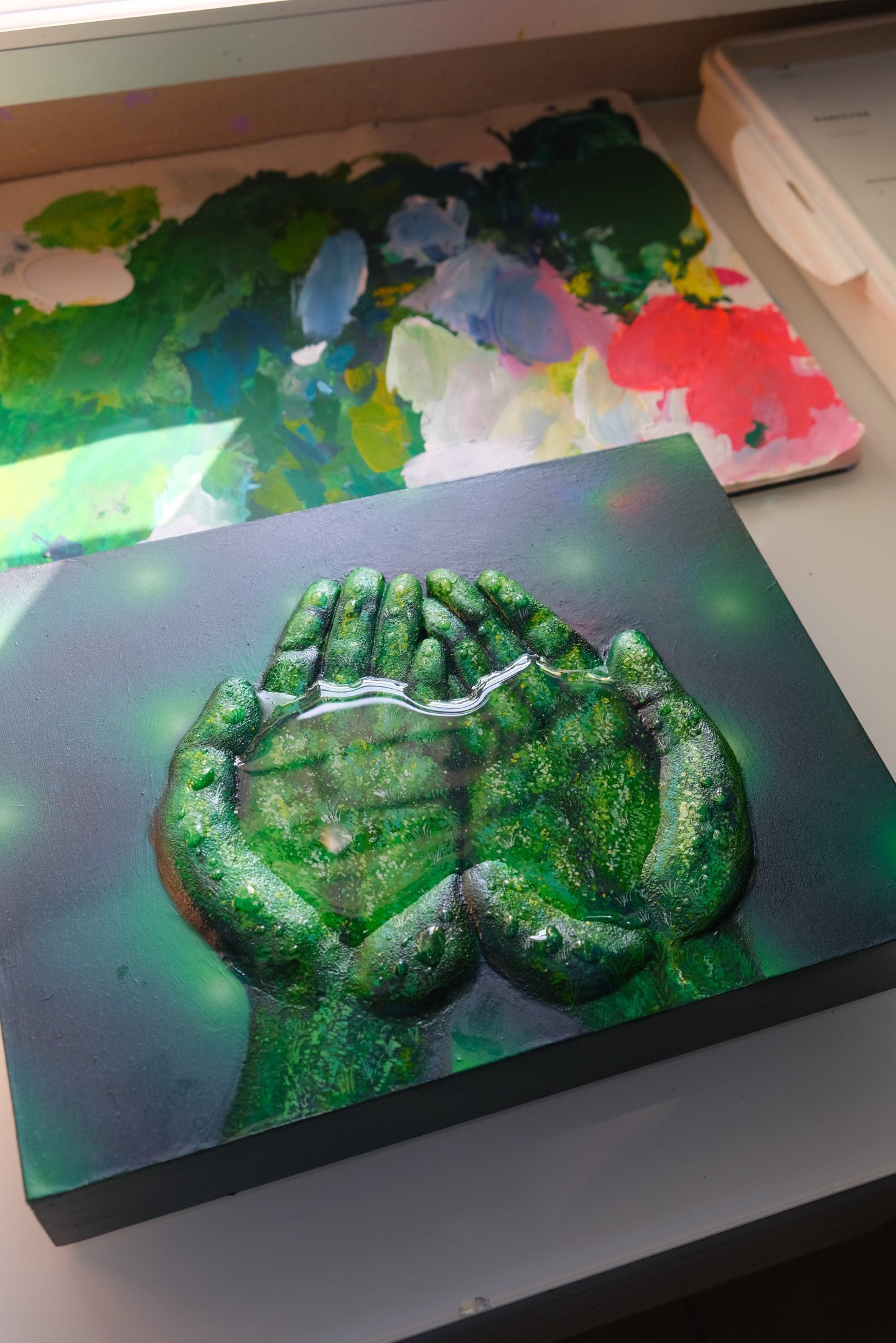
Yes! One of my most special pieces is actually the first mixed media clay painting I ever created, titled “Regeneration.”
It depicts a pair of hands covered in moss, gently holding a pool of clear water in their palms. The piece was inspired by the cyclical nature of life and death, the idea that death is not an end, but a transformation that gives rise to new beginnings.
What makes this work especially meaningful to me is not only its concept, but also what it represents in my own artistic journey. It was the first time I explored a more complex combination of mixed media and three-dimensional elements. Through creating it, I experimented with new materials, learned new techniques, and stepped into a completely different way of creating.
In many ways, this piece actually opened up a new world for me! It was the beginning of the path where I started to merge clay and painting, which later became a defining part of my practice.
3. I’m sure that, to create experimental artworks, the process has to differ somewhat from the conventional. Can you walk us through your creative process?
My creative process is actually quite intuitive and not overly complicated.
Most of the time, a piece begins with a fleeting image, something that comes to me unexpectedly, almost like a moment of imagination that I feel compelled to capture. I would describe myself as a very instinct-driven artist, and once I begin painting, I tend to follow that intuition closely.
I might start with a loose sketch to guide the direction, but from there, the process becomes very fluid. I move into sculpting with clay, building the forms, and then gradually adding colour and details. I rarely stop to overthink or heavily revise, instead, I trust the process and allow the work to evolve naturally as I go.
4. What is the most unexpected combination of media you have used in one piece?
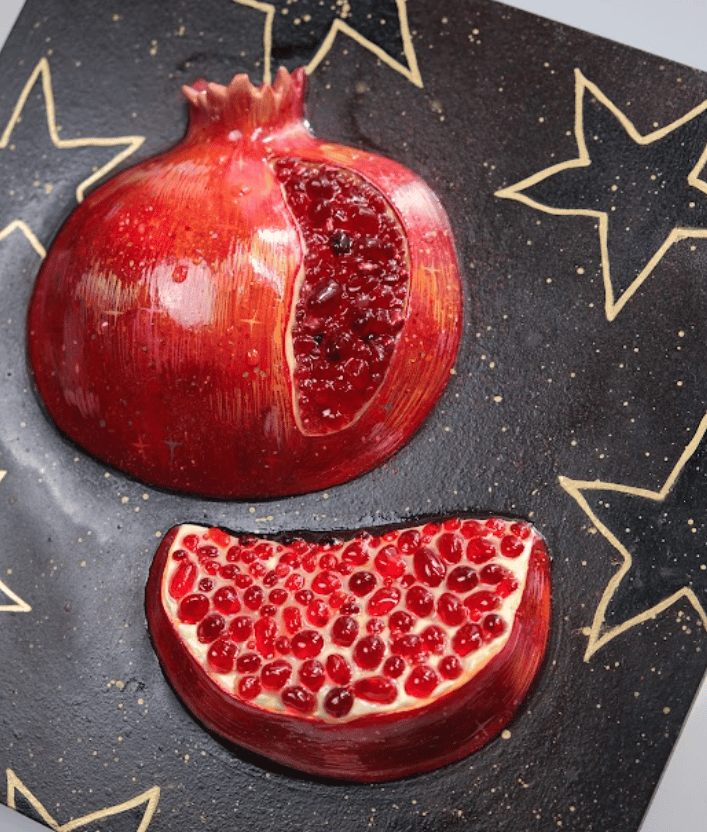
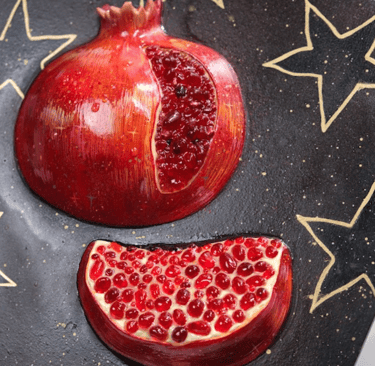
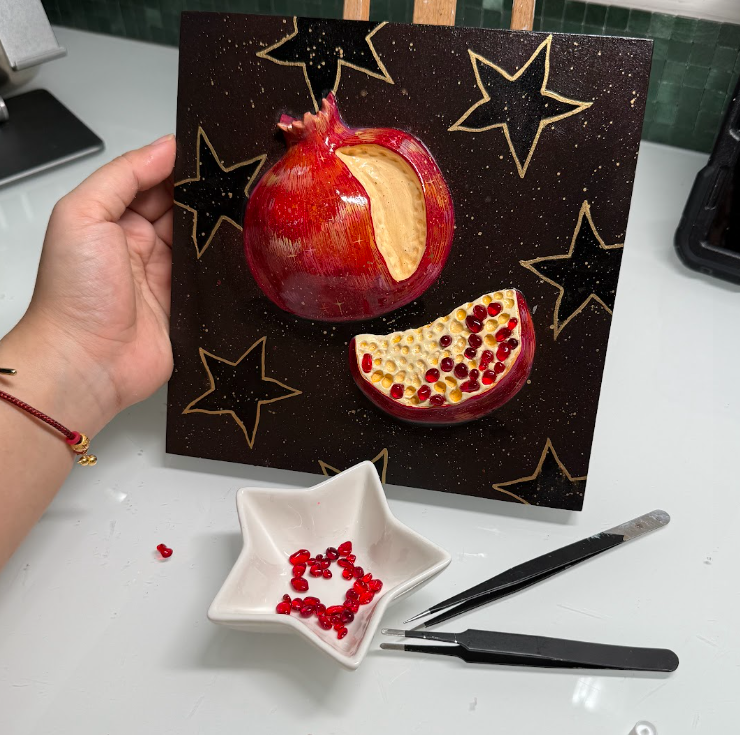
One of the most unexpected combinations I’ve used was incorporating small decorative gemstones (the kind typically used in junk journaling) into one of my sculptural paintings.
I originally came across these deep red gemstones while shopping online. I wasn’t looking for anything specific at the time, I just simply thought they were beautiful and decided to get them. About a week later, I suddenly realised how much they resembled the pomegranate seeds.
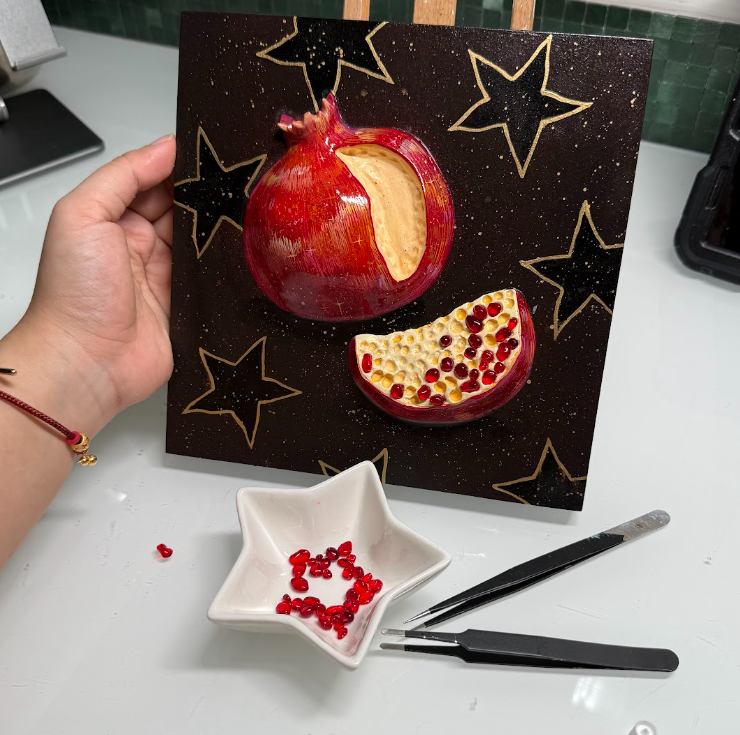
That moment sparked the idea for the piece “Red Ruby.” I sculpted the form of the pomegranate with clay, and then carefully embedded each of the gemstones into the surface to mimic the seeds.
It was a very intuitive and spontaneous process, but I was really happy with how it turned out ! The material brought a unique texture and richness that I wouldn’t have achieved otherwise.
5. What is a “rule” in art that you take pride in “breaking”?
To be honest, I don’t consciously think about following or breaking any rules when I create.
I studied Fine Art for two and a half years, where I learned a lot about artistic fundamentals, art history, and how the art world operates. That foundation is something that I really value, and it shaped the way I understand art.
But after graduating, I didn’t feel drawn to follow a more conventional, gallery-based path like many artists do. Instead, I chose to focus on creating what I genuinely enjoy.
If there is a “rule” I’ve broken, I think it’s the idea that art has to follow a certain structure, direction, or expectation. I don’t create with any of that in mind, I simply follow what feels right to me, and allow myself the freedom to explore and make what I truly want.
6. Looking back at your journey, what has been the easiest and toughest material to work with?
Looking back, I think the materials I’ve found the most challenging to work with are oil paint and graphite.
Both of them require a great deal of technical skills and patience, which I have to admit is not my strongest quality. I really admire artists who could work well with these mediums, but for me, they typically demand a level of slowness and precision that doesn’t quite align with how I naturally create.
On the other hand, I’m most comfortable working with acrylic gouache. I love how vibrant the colours are, and the fact that it dries quickly allows me to stay in the flow without interruption. As a very intuitive artist, I tend to work in bursts of inspiration, so being able to move continuously without having to pause and wait is really important to my process.
7. What advice would you give to someone who wants to pursue art as their full-time career?
I think my answer to this question has changed over time.
If you had asked me five or six years ago, I would have wholeheartedly said, “Go for it! chase your dreams.” And I still believe that passion is incredibly important.
But now, especially in today’s economy, I would encourage people to approach it more thoughtfully. Take the time to understand the market, be honest about your strengths and weaknesses, and think carefully about how you want to build your future.
I don’t say this to discourage anyone, but as someone who has experienced this path firsthand, I know that being a full-time independent artist is not easy. Once something you love becomes your work, you also have to face the practical realities that come with it, especially financial pressure.
There are also many incredibly talented artists out there, and the current environment can be challenging for independent creatives. So if someone truly wants to pursue this path, I would say: prepare yourself, be patient, and work towards it with intention.
At the same time, it’s just as important to protect your love for creating, to not let that passion fade along the way.